AEIDL partners presented in Barcelona a new paper exploring the right to stay
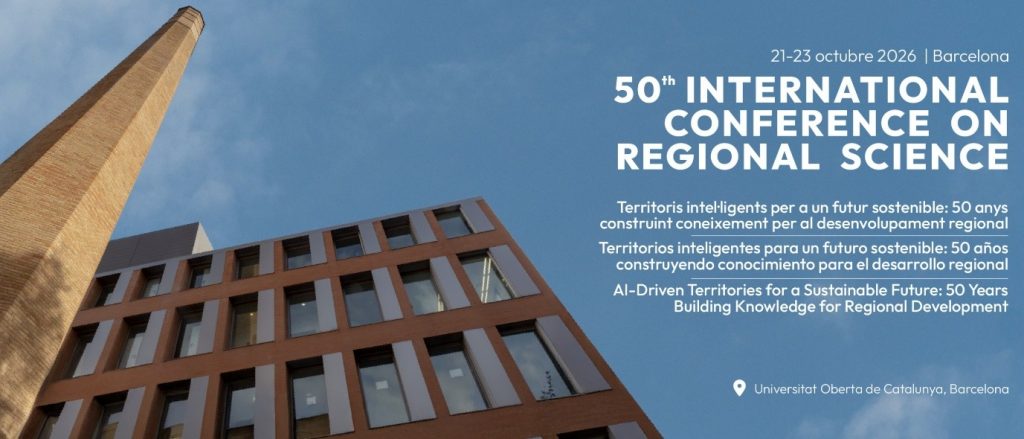
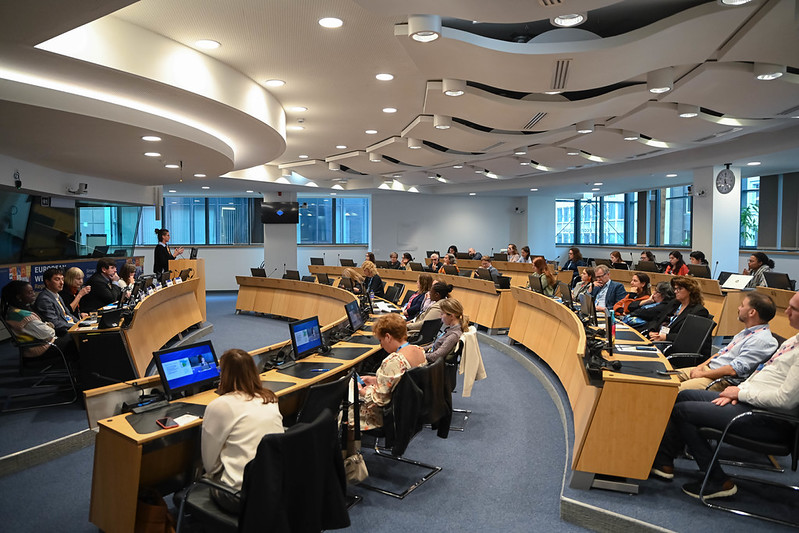
At the international Congress AI-Driven Territories for a Sustainable Future: 50 Years Building Knowledge for Regional Development hosted by the Spanish section of the European Regional Science Association (AECR) and held in Barcelona, AEIDL partner Serafin Pazos-Vidal presented a new paper together with Janne Sinerma exploring one of the most prominent emerging concepts in European territorial policy: the Right to Stay.
Titled “From Freedom to Stay to Right to Stay: Rethinking Territorial Cohesion through a Place-Based Delivery Lens“, the paper examines how the growing debate surrounding the Right to Stay can be understood through the experiences of territories and communities rather than solely through demographic trends.
Moving beyond demographic decline
The concept of the Right to Stay has gained increasing attention following the publication of Enrico Letta’s report Much More Than a Market and the European Commission’s subsequent commitment to develop a dedicated Right to Stay Strategy.
Public debate has often framed the concept as a response to depopulation, ageing or brain drain. However, the paper argues that its significance goes much further. Rather than asking why people leave, it asks whether public policies provide the conditions that make staying a realistic and attractive option.
The central proposition developed in the paper is that the Right to Stay should be understood as a delivery-oriented framework for territorial cohesion. In other words, it offers a lens through which policymakers can assess whether territorial cohesion is actually being delivered in people’s everyday lives.
What evidence informed the analysis?
The paper draws extensively on evidence generated through SMART ERA complemented by findings from sister Horizon Europe projects FUTURAL, RURACTIVE and related projects.
For SMART ERA in particular, the analysis builds on findings from the project’s policy audits and governance assessments, SMART ERA deliverable on Synthesis of Policy Audits in Pilot Regions, notably:
- local and regional innovation ecosystems;
- governance arrangements supporting community-led innovation;
- access to services and territorial resilience;
- policy fragmentation and coordination challenges;
- the role of intermediary organisations;
- territorial intelligence and evidence-based policymaking.
Five territorial systems shaping the ability to stay
One of the principal findings presented at AECR is that the ability to remain in a territory does not depend on a single factor. Instead, it emerges from the combined performance of five interconnected territorial systems:
- Essential services and accessibility
- Economic opportunities and labour markets
- Mobility and connectivity
- Housing and quality of life
- Governance capacity and territorial resilience
The paper argues that territorial inequalities often arise not from shortcomings in any one of these dimensions alone, but from their cumulative interaction over time.
SMART ERA’s contribution: institutions matter
A particularly important contribution from SMART ERA concerns governance and institutional capacity.Across the project’s pilot territories, the analysis consistently found that many barriers to innovation and territorial development were institutional rather than technological. Fragmented governance, weak coordination, limited participation mechanisms and insufficient territorial intelligence frequently emerged as more significant constraints than funding gaps or technological readiness.
This finding aligns closely with similar conclusions emerging from FUTURAL and RURACTIVE and reinforces a broader message: successful territorial development depends not only on investment and infrastructure, but also on governance arrangements capable of mobilising local actors, coordinating policies and supporting community-led solutions.
A timely debate
The presentation was especially timely given the broader discussions taking place at the conference. In his keynote address, Professor Ron Boschma highlighted the importance of overcoming policy silos and path dependencies in regional development.
The Right to Stay framework explored in the paper seeks to address precisely this challenge. By connecting debates on territorial cohesion, demographic change, services of general interest, governance, innovation and place-based development, it offers an integrated perspective on what allows territories and communities to remain viable, resilient and attractive places in which to live and work.
Looking ahead
The forthcoming European Commission Right to Stay Strategy will undoubtedly shape future policy discussions. However, the paper argues that regardless of the final policy architecture, the key question remains the same:
Do public policies create the conditions that allow people to remain in the places they choose to call home?
The authors hope that the experience generated through SMART ERA and related Horizon Europe projects can contribute to answering that question and to shaping a more place-sensitive and delivery-oriented approach to territorial cohesion across Europe.